Perimenopause Explained
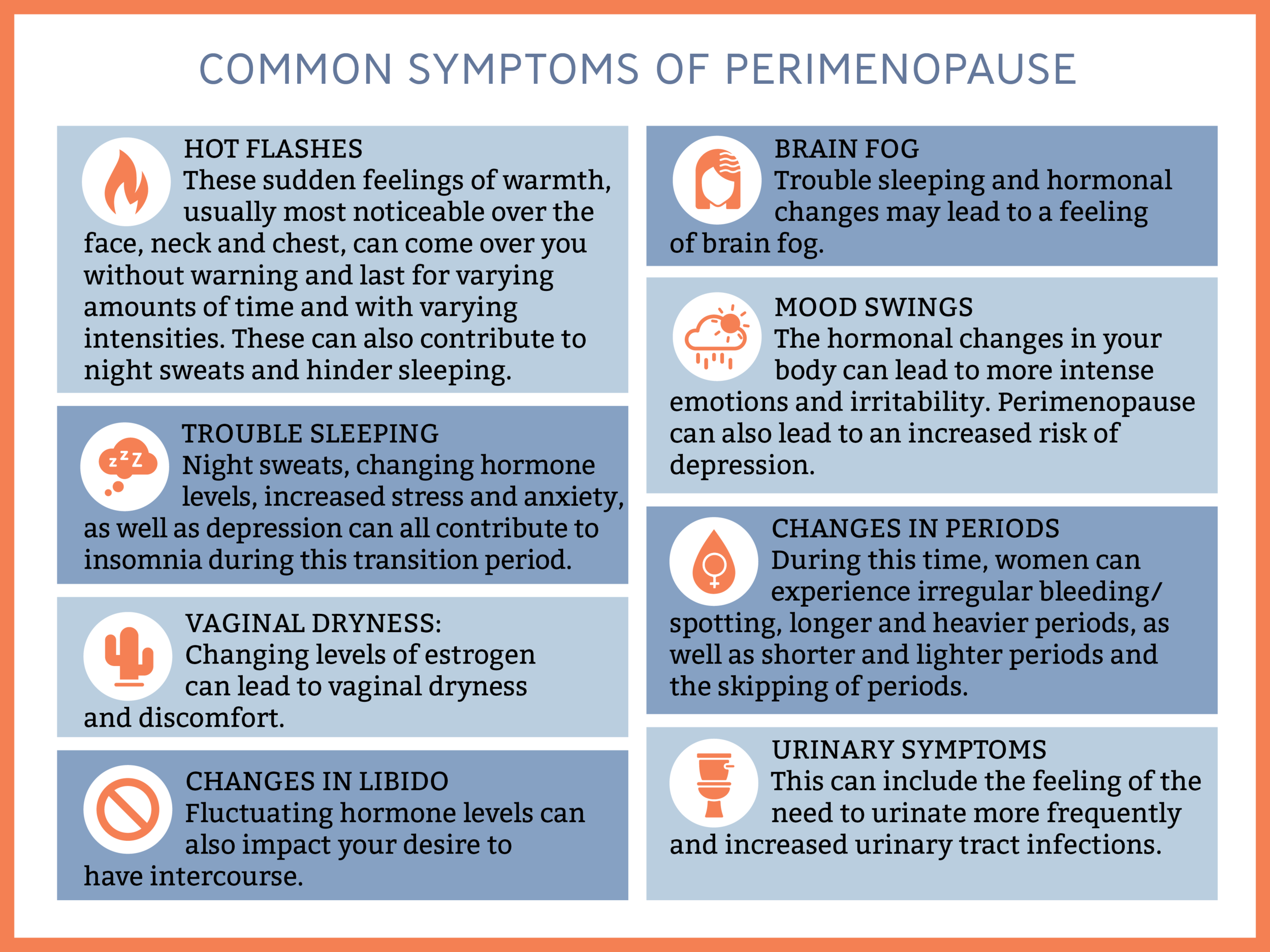
Feel like you are too young to be going through menopause but are symptomatic? You could be going through perimenopause, the phase during which your body is transitioning into menopause. During this transition, you can experience symptoms commonly associated with menopause. Women often begin to experience this phase in their 30s and 40s. This phase can last up to 10 years and is concluded when a woman has had one year without periods (a primary sign you’ve entered menopause). While some women do not have any or very mild symptoms during this transition, others can have more intense responses.
Options for Symptom Relief:
Hormone Therapy: Your doctor may recommend this based on your symptoms. This process involves taking estrogen and progestin (if you have never had a hysterectomy/have a uterus).
Healthy Lifestyle: Eating a balanced diet, exercising regularly, and getting plenty of sleep can help relieve symptoms.
Helpful Hacks:
Portable and bedroom fans can provide relief during a hot flash
Sleep supplements (check with your doctor before taking) and good sleep hygiene (think avoiding screens, not eating right before you to sleep, etc.) can help with insomnia
Fight discomfort from vaginal dryness with doctor-recommended lubricants
Leak-proof underwear has come a long way in the last few years, and there are washable/reusable options that can be a great fit when you are worried about urinary symptoms or don’t know what to expect from your period.
If you have other questions about perimenopause, be sure to ask your doctor at your next appointment.