Holiday Travel Tips for Expecting Mothers
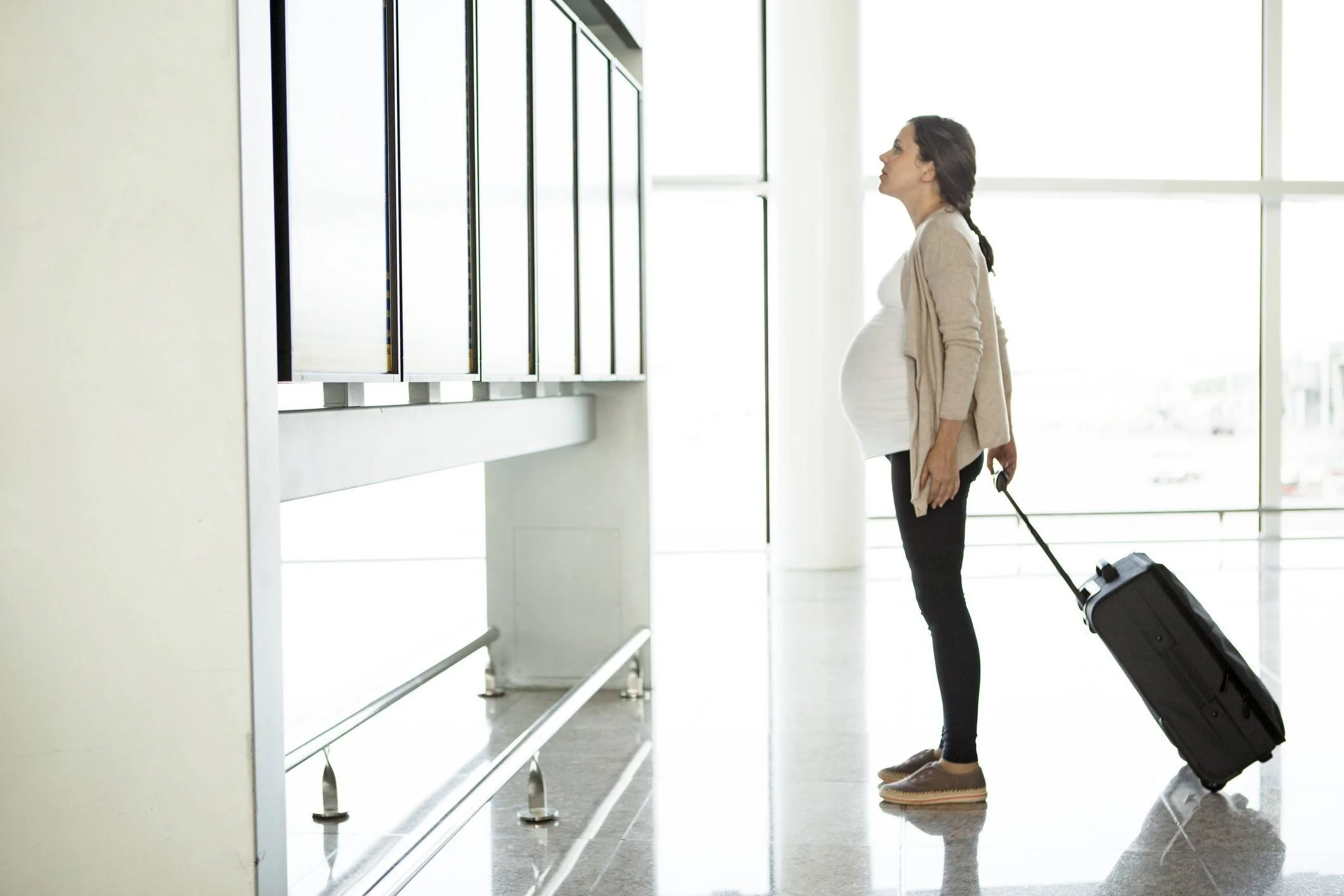
We receive a lot of questions around this time of year from expecting moms concerned about holiday travel. Here, we offer our best advice and answer the most commonly asked travel-related questions.
Q: “Is it safe for me to travel while pregnant?”
A: Yes, but it depends on your health and the stage you’re in. For most women, traveling during pregnancy is safe. As long as you and your baby are healthy, you can travel safely until the 36-week mark. After 36 weeks or if you are experiencing any health conditions related to your pregnancy, we don’t recommend that you travel. Visit your doctor if you have any additional questions regarding your ability to travel.
Q: “What should I do before traveling?”
A: We recommend you schedule a checkup with your doctor before leaving. In addition to visiting the doctor, be sure to pack any vitamins or medications you may need, check that you are up to date with your vaccines, know your estimated due date, and find a hospital with delivery or OB/GYN services near your travel destination. More importantly, make sure your travel plans are easy to change. We recommend getting travel insurance on any tickets or reservations in case you decide to or need to stay home.
Q: “What are the best tips for traveling by car/flying?”
When traveling by car:
Make each day’s drive as short as possible. If you are driving for multiple hours, make regular rest stops for the bathroom, to get more fluids, and to stretch your legs/walk around.
Wear your seat belt every time you ride in the car. You should buckle the belt low on your hipbones, below your belly, place the shoulder belt off to the side of your belly and across the center of your chest (between your breasts).
When flying:
Keep your due date in mind when booking your flight and check your airline’s policies when planning your trip. Some domestic airlines restrict travel completely or require a medical certificate during the last month of pregnancy. For international flights, the cutoff point often is earlier, sometimes as early as 28 weeks.
Deep Vein Thrombosis (a blood clot that forms in your leg or pelvis due to sitting for a prolonged length of time) is more common during pregnancy. Book an aisle seat so you can easily get up and stretch your legs. If you’re not allowed to choose your seat, ask your flight attendant or seat neighbor if you can swap seats because you plan on getting up often. Compression stockings can also help prevent DVT by improving blood flow in your legs.
Plan to stand up and walk around every 2 hours or so.
Bring water with you on the plane, as well as healthy snacks. Avoid gas-producing foods and carbonated drinks before your flight. Gas expands in the low air pressure in airplane cabins and can cause discomfort.
Wear your seatbelt at all times.
No matter which mode of transportation you are taking, be sure to drink lots of fluids, walk and stretch at regular intervals, and wear loose-fitting comfortable clothing (unless you need compression stockings, which we admit, are neither loose fitting nor comfortable).
If you have any other questions or concerns, we recommend contacting us and setting up an appointment with your doctor prior to traveling.