
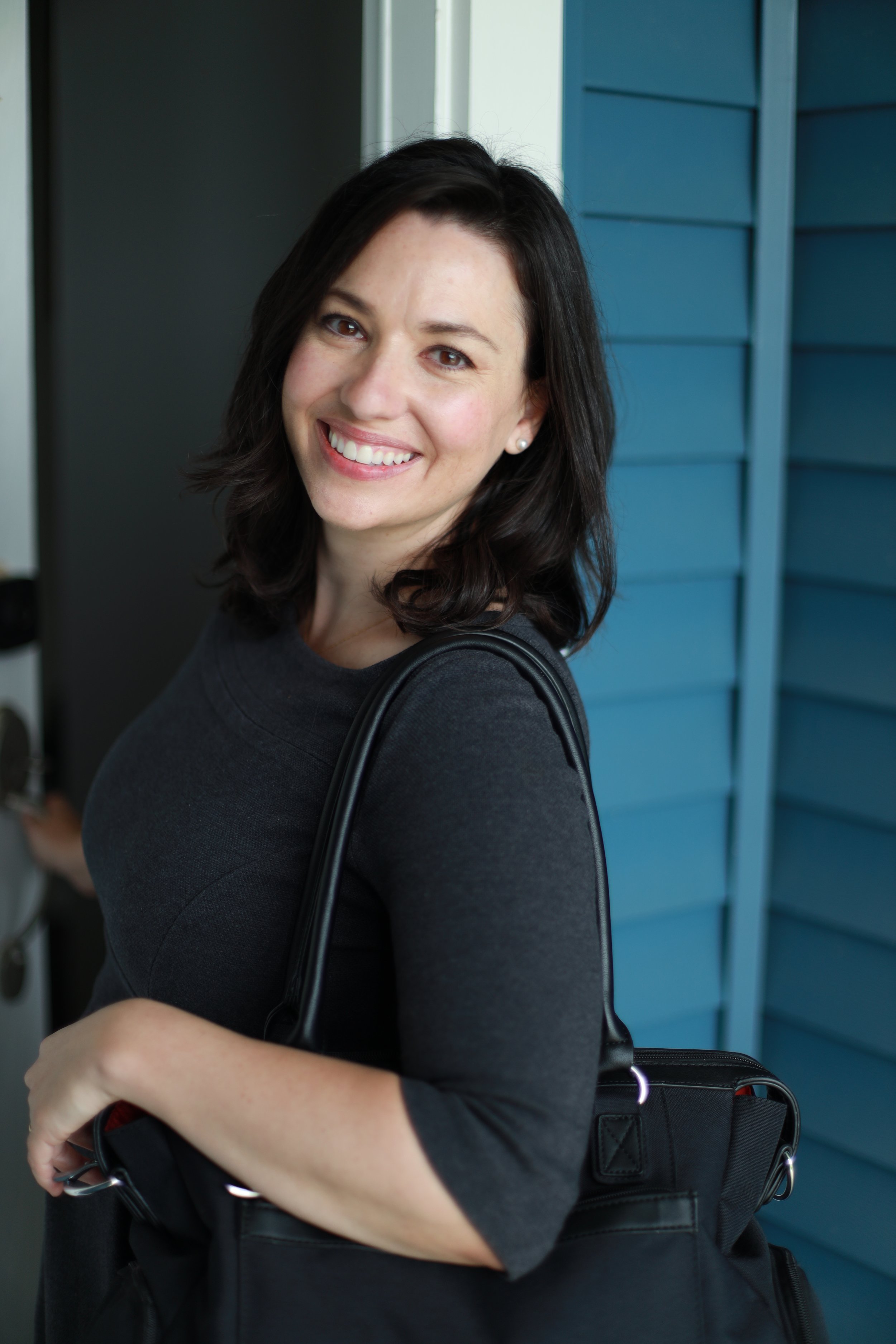
As part of our #HERstory series, we're featuring moms who are lactation specialists for National Breastfeeding Awareness Month. Check our blog for all of the interviews, and keep reading to meet Ashley Fore, MSN, RNC-MNN, IBCLC. Ashley is a local mom and lactation consultant who founded Flow Lactation to help moms reach THEIR breastfeeding goals with both virtual and in-home consults in Charlottesville/Crozet that cover latching, pumping and prenatal prep.
Can you share your experience of how becoming a mother shaped your career path?
I'm actually one of the rare lactation consultants who started down this career path before having children. I was a labor & delivery nurse for years and then was inspired to be a lactation consultant when I worked with Ameda, a breast pump company.
You'd think that being a lactation consultant would guarantee a smooth breastfeeding journey. But, with my two children, I struggled with many of the common challenges just like other moms, such as mastitis, a tongue-tied baby, and a spitty baby.
Breastfeeding hasn't been an easy experience, but I'm thankful for what my body has been able to do. My own experience definitely informs my clinical approach. I can empathize with my clients' issues and feelings, and I know how important it is to make manageable changes quickly—because when every feeding is painful or difficult, you need results fast.
What are some misconceptions about breastfeeding that you come across with clients and/or the media and wish you could help clear up? What about misconceptions of working with a lactation consultant (e.g. expense, pressure to keep breastfeeding, etc.)?
One common misconception is that lactation support is expensive. In reality, your health insurance plan will probably fully cover your visits with a lactation consultant. Under the Affordable Care Act, insurers must cover most types of lactation visits with no out-of-pocket costs to patients. For example, I'm an in-network provider with Aetna, and their plans generally cover 3 in-home or virtual consults—anytime from pregnancy to weaning. Typically, none of those visits involve any co-pay or out-of-pocket costs for the family.
Another misconception is that lactation consultants are only there to step in after there's a breastfeeding problem. In reality, there are benefits to meeting with a lactation consultant before issues arise. For example, I highly recommend that expecting parents have a prenatal lactation consult. It's a great way to get answers to specific questions and to help set up your breastfeeding areas so that you're confident and prepared for when baby arrives. And if there are breastfeeding changes on the horizon—like going back to work, traveling, or weaning—your lactation consultant can work with you to create a plan to help with those transitions.
Is there anything expecting moms can do to better help prepare for the breastfeeding journey?
I’m a big fan of having a prenatal lactation consult, and Flow Lactation offers both in-home and virtual ones. During a prenatal consult, your lactation consultant can answer your specific questions about breastfeeding, help you choose supplies and a pump that will work for you, and even assist with important, non-medical issues, like navigating family dynamics and lining up the postpartum support you really need.
These are important conversations to have before you’re sleep-deprived and, possibly, in discomfort after delivery. And if issues pop up and you do need help after baby arrives, it’s nice to have someone you already know and can contact immediately for a follow-up visit.
Anything else you would like to say or share?
Flow Lactation believes that how you feed your baby is up to YOU. It’s one of many parenting decisions you'll make—like what pain management you choose for your delivery, what solid foods you'll give your older infant, or what car seat you buy. We all know about the health benefits of breastmilk, but the health benefits are just one factor that goes into infant feeding decisions. And just like with all aspects of parenting, every child is different; every family’s situation is different.
What’s important to me is that mothers have accurate and unbiased information, that they're given autonomy to make a decision that is best for them, and that they're respected in their choices.
If a mother is choosing to breastfeed—for any length of time and in any of the many ways one can give human milk—it’s my job to make sure she is supported to reach her own feeding goals. That means giving evidence-based guidance, finding the source of feeding challenges, and presenting options to manage those challenges. That’s the Flow Philosophy.